BC Hydro’s Power Procurements (2024/25 Calls for Power)
What the results signal for BC's next build cycle
September 9, 2026
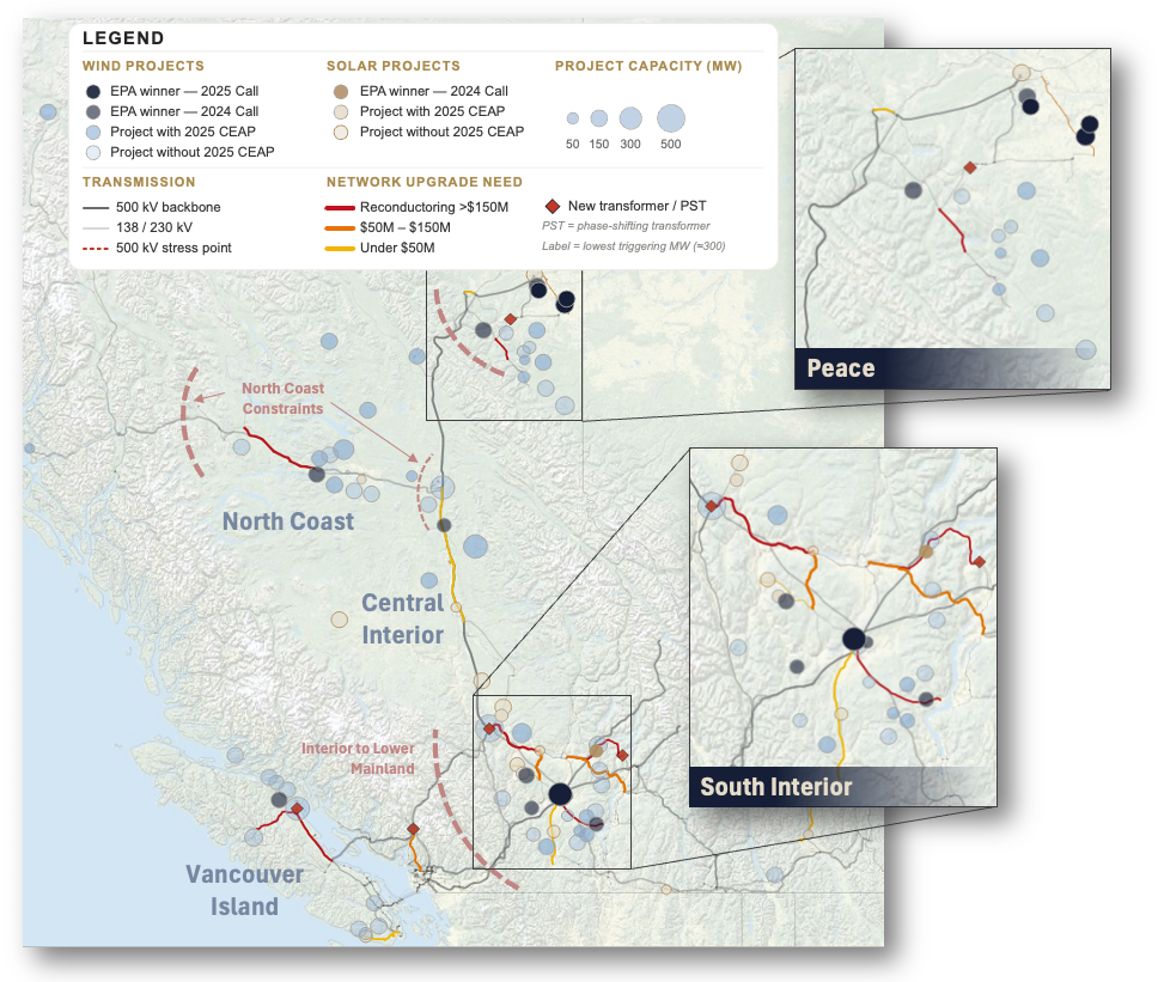
BC's next build cycle has begun after more than fifteen years without a competitive procurement. Industrial load growth in Northern BC should sustain it over the coming decade. New transmission investment is needed to open up more generation.
Read More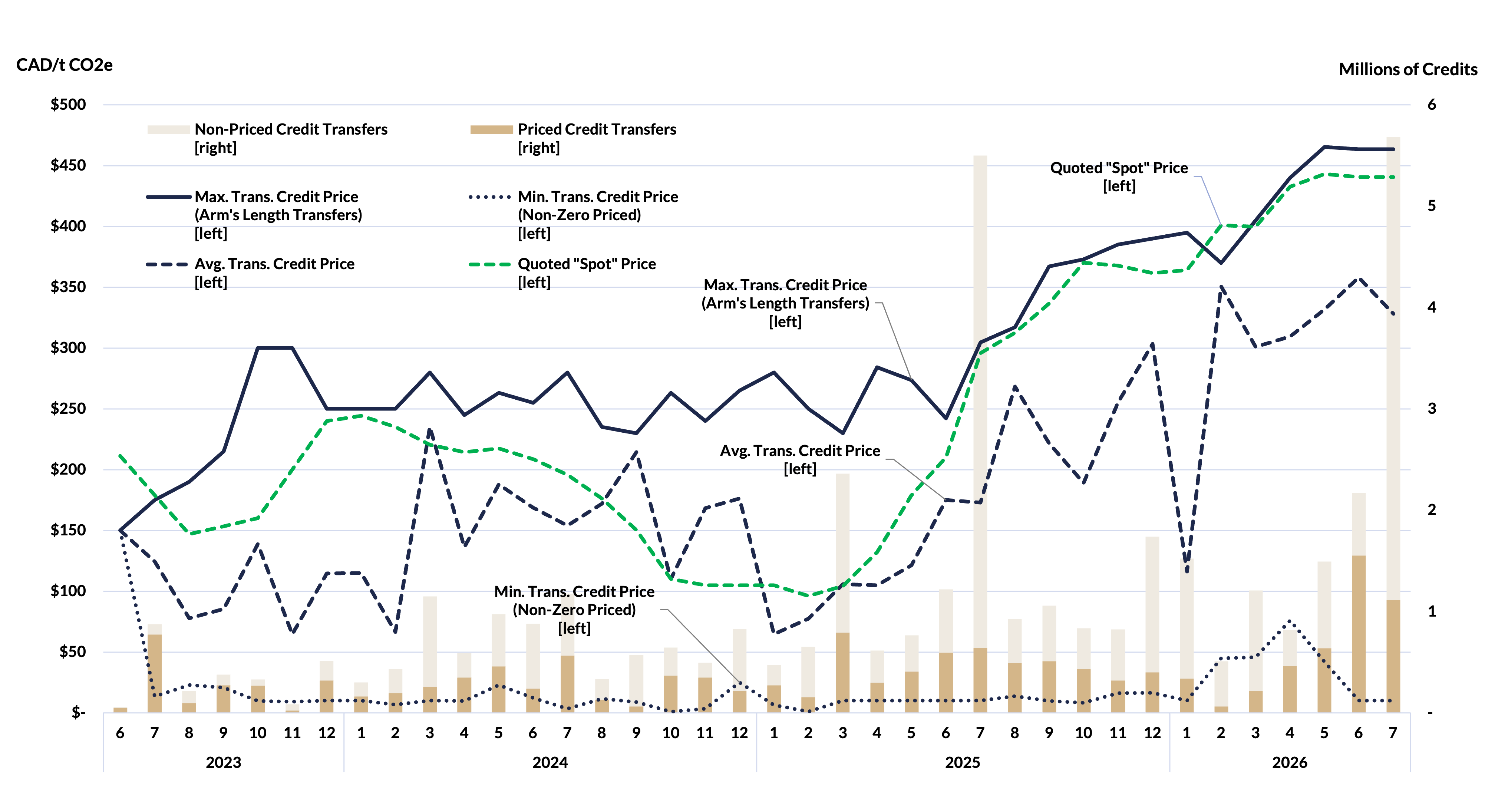
Drivers of Climbing CFR Credit Prices
Credit market tightening and U.S. competition for low-carbon fuels
August 27, 2026
With carbon credit prices under Canada’s federal Clean Fuel Regulations (CFR) currently pricing above CAD 400/tonne, the data points to continued upwards pressure – with CAD 600/tonne+ prices required to compensate price-setting low-carbon fuels and compete for supply with parallel regulatory regimes in the U.S.
Read More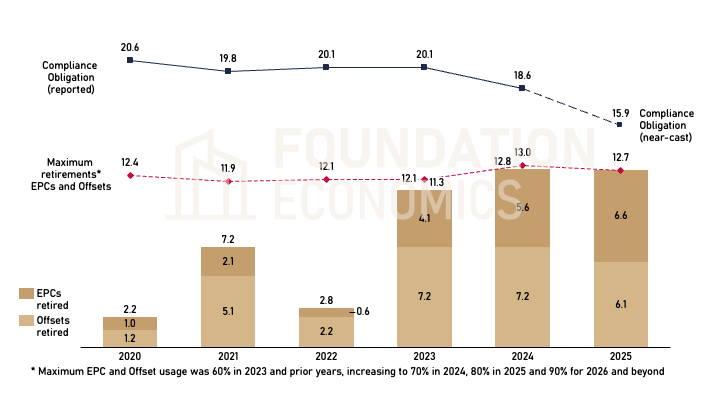
Alberta TIER’s 2025 credit retirements
Implications of declining obligations for credit bank and prices
July 9, 2026
From Alberta Carbon Registries data, we calculate that 12.7 million tonnes of EPCs and Offsets were retired to satisfy TIER-regulated emitters’ 2025 compliance obligations. Assuming all emitters satisfied 80% of their obligations with EPC/Offset retirements (the regulatory maximum for the 2025 compliance year), implied emitter obligations were 15.9 Mt in 2025 - a significant decline from 2024.
Read More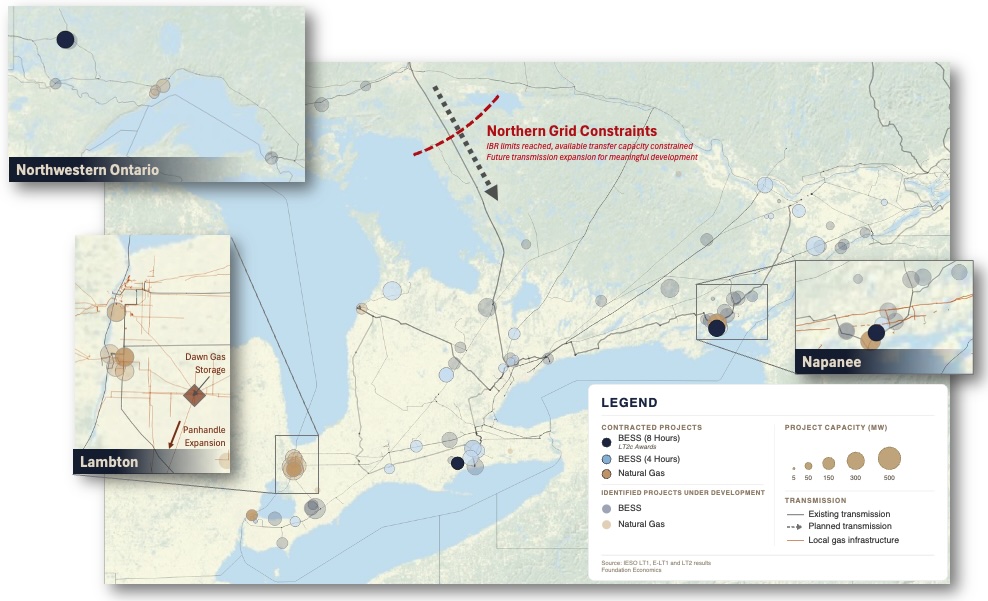
Ontario’s Latest Capacity Procurement
(LT2c Window 1)
BESS continues to outcompete new gas
June 30, 2026
In June 2026 the IESO released initial results for its Long-Term 2 capacity procurement (LT2(c-1)), awarding 20-year contracts to three battery storage (BESS) projects totalling 640 MW. LT2(c-1) tracks two global trends: BESS is displacing gas for new capacity, and project returns increasingly depend on merchant revenue that rewards flexibility over low marginal cost.
Read More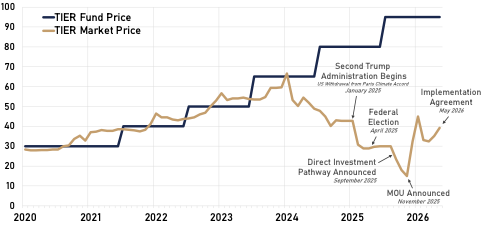
Alberta Carbon Market Reset
May 15th Canada-Alberta Implementation Agreement
May 26, 2026
The May 15 Implementation Agreement between Canada and Alberta translated the November MOU into tangible next steps and underpins confidence that industrial carbon pricing under Alberta’s TIER regime will continue. The Agreement comes after a tumultuous 18 months for the TIER market. We highlight key questions that market participants must consider for future pricing of TIER’s carbon credits (EPCs and offsets).
Read More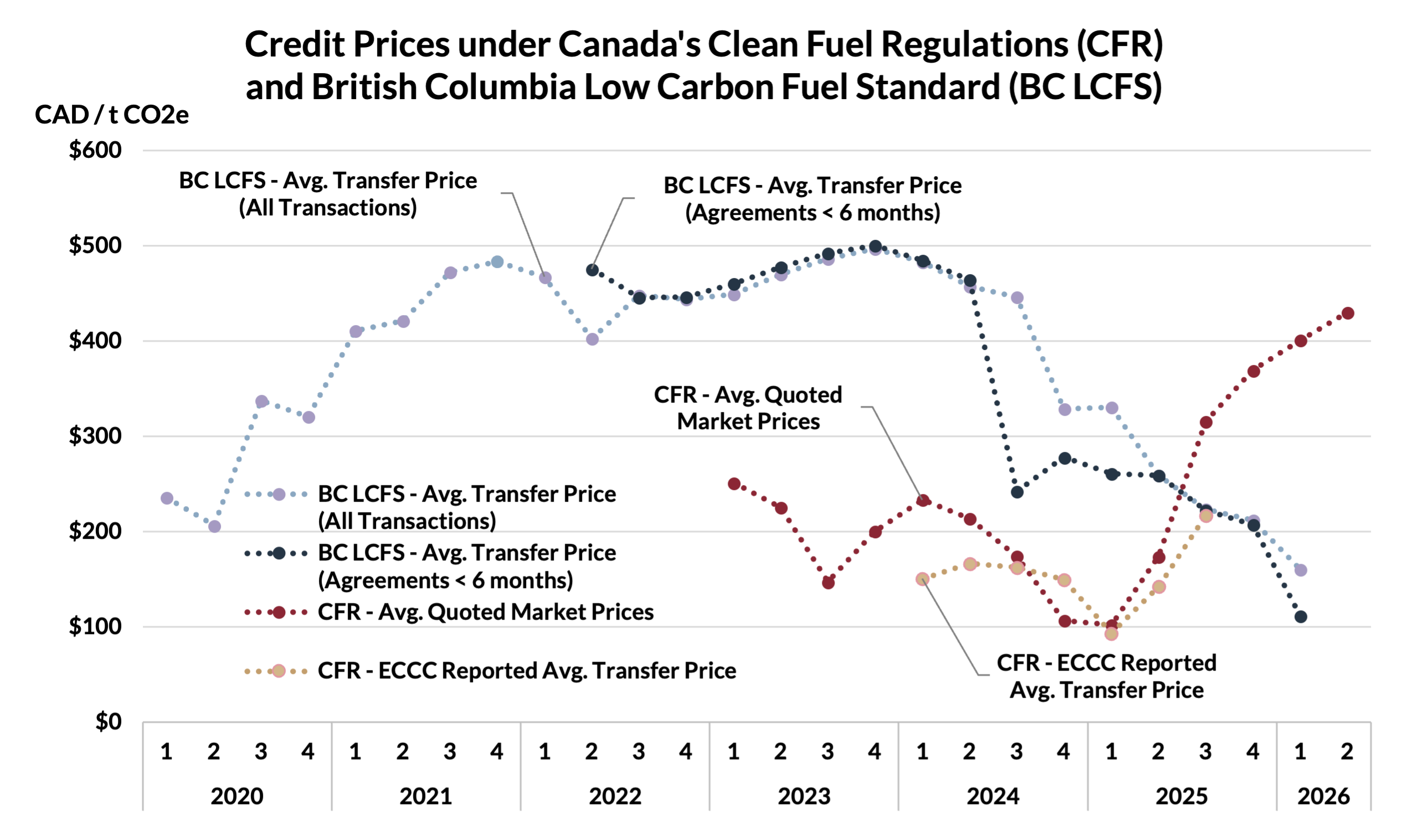
Understanding Canada’s Other Carbon Price
Credit Pricing Dynamics under Canada’s Federal Clean Fuel Regulations (CFR)
May 6, 2026
In early April, quoted prices for credits under the CFR reached $430 per tonne of reduced carbon intensity, having climbed steeply over the last year from a nadir of $95/t in March 2025. This follows from economic fundamentals of supply and demand for credits under this regulatory regime: the price for credits must compensate the marginal supply of low-carbon fuels to meet fuel suppliers’ obligations.
Read More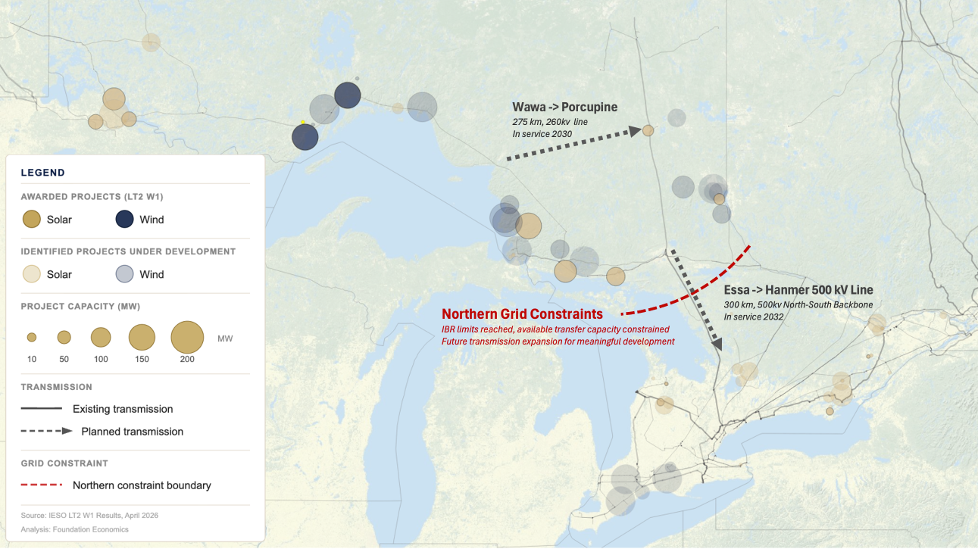
Ontario's Latest Renewable Procurement
(LT2 Window 1):
What the Results Signal for Ontario's Energy Future
April 28, 2026
The IESO released results for the first window of the Long-Term 2 (LT2) Energy procurement in early April 2026, awarding 20-year contracts to 14 projects totalling 1,315 MW of capacity and 3.02 TWh of annual energy. This was the first competitive renewable energy procurement in Ontario in over a decade.
Read More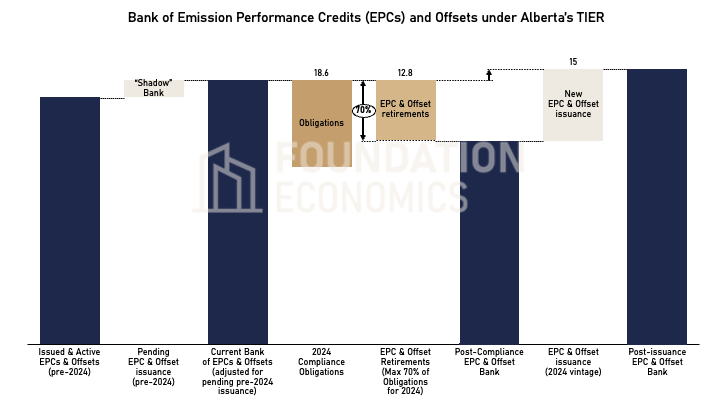
Alberta TIER 2024 Compliance results:
Implications for a growing EPC/Offset bank
November 3, 2025
Despite an increase in 2024 GHGs, obligations under TIER declined. The volume of new EPCs and Offsets for 2024 versus retirements mean a growing EPC/Offset bank – and continuing downward pressure on depressed prices.
Any outcomes of “Grand Bargain” negotiations between Alberta and Canada’s federal government will determine the pace and timeline for the draw-down of the presently ~60 million tonne bank of EPCs and Offsets – and, in turn, the pathway for future EPC/Offset prices.
Read More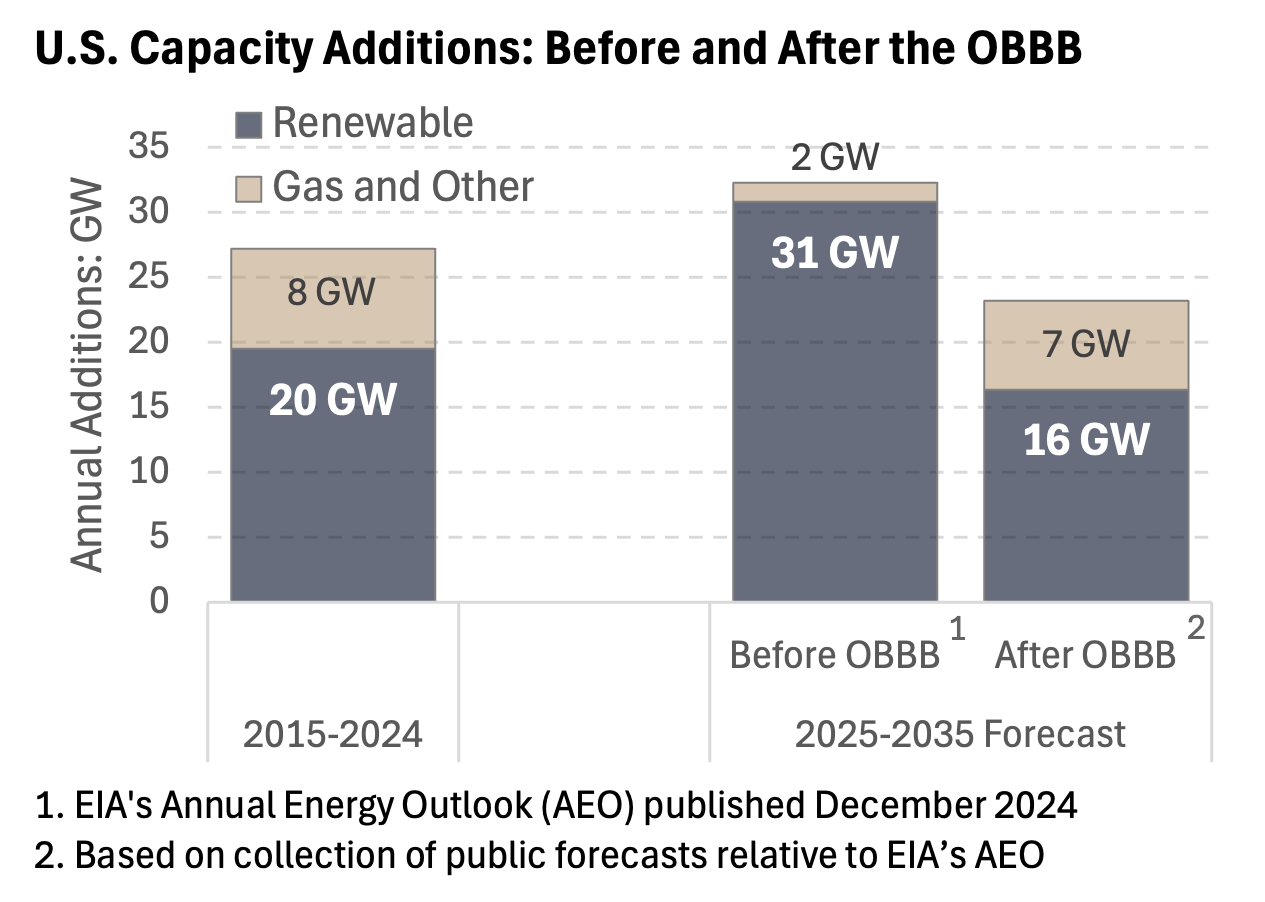
From the Inflation Reduction Act to the One Big Beautiful Bill:
A Sudden Shift for US Renewables
September 16, 2025
As development in the U.S. slows, Canada is in the midst of a sustained build cycle. For IPPs and capital providers with paused growth strategies south of the border, this offers a chance to stay active and continue scaling over the next several years.
Read More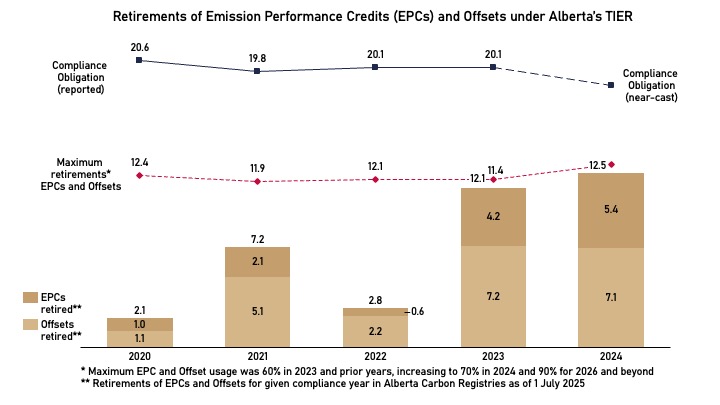
Alberta TIER’s 2024 retirements:
What does this mean for future prices?
July 8, 2025
With Alberta TIER's June 30th compliance deadline now passed, 12.5 million EPCs and Offsets were retired for 2024. This result closely aligns with our bottom-up "near-cast" of obligations across TIER-regulated facilities, and, in this post, we explain what this means for TIER's market balance and future pricing.
Read More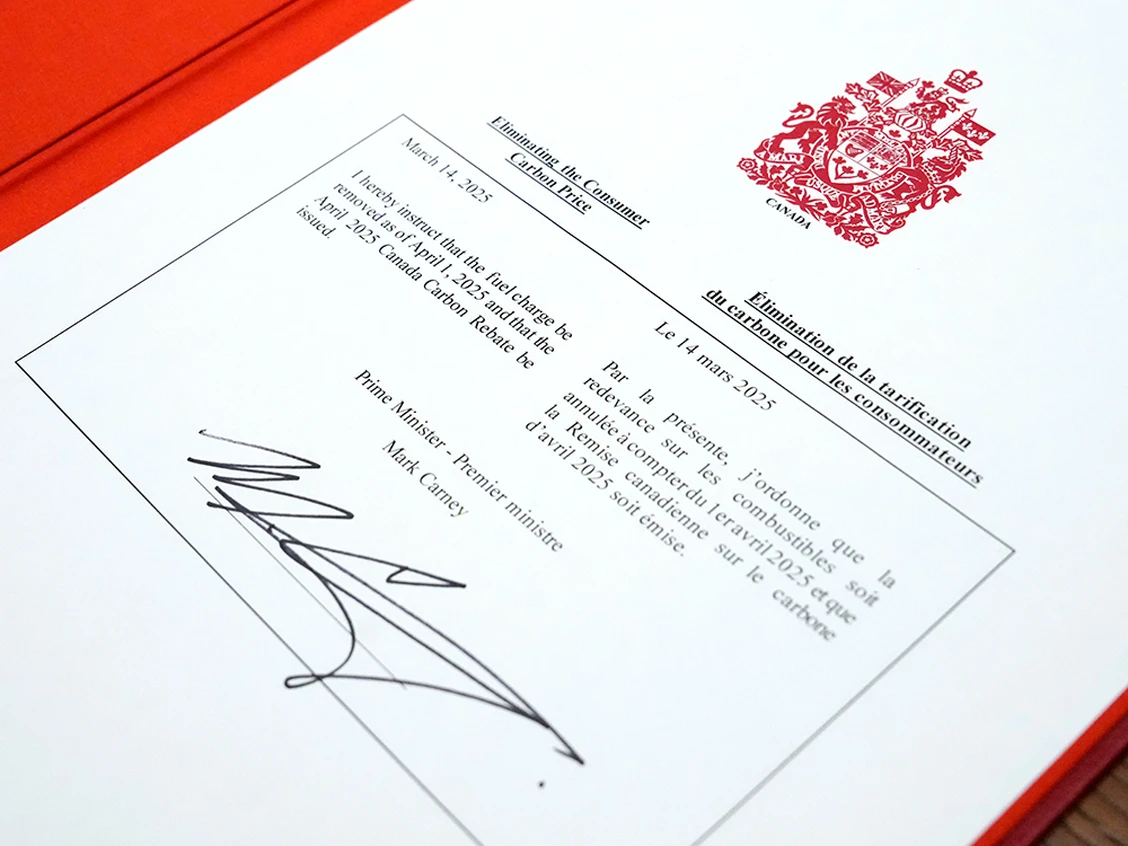
Post-Election Questions for Canadian Carbon Pricing
April 30, 2025
As Mr. Carney’s party shifts from campaigning to governing after winning Monday’s election, how it navigates decarbonizing our economy is pivotal to Canadian competitiveness – now, and for the long run.
Read More